
Enzyme Profiling
CD BioSustainable is a leading provider of cutting-edge bioremediation solutions, committed to environmental sustainability and ecological balance. Our expertise in Enzyme Profiling offers a powerful tool for precise and efficient biological species identification, catering to a wide range of applications across diverse sectors.
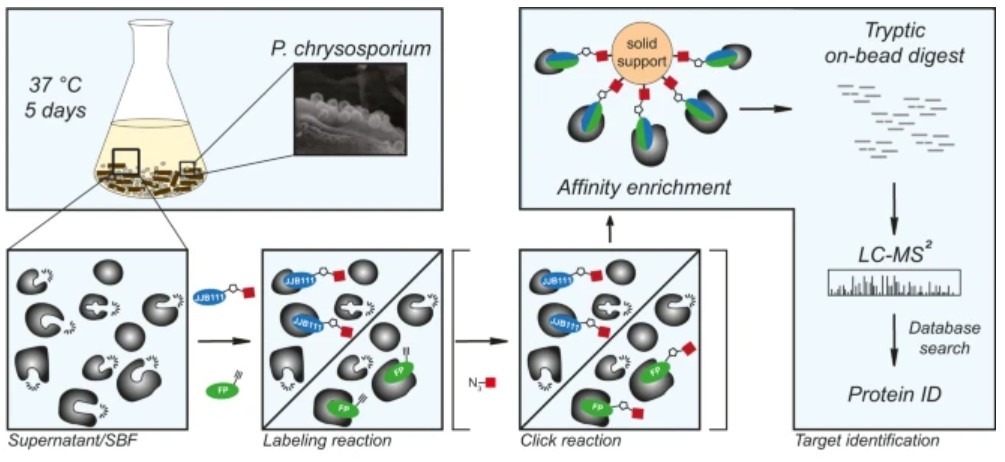
Fig 1. Activity-based protein profiling (Christian S.,
et al., 2022)
Introduction to Enzyme Profiling
Enzyme profiling is a sophisticated technique that harnesses the unique enzymatic signatures of organisms for accurate species identification. Every organism possesses a distinct set of enzymes, biological catalysts that drive essential biochemical reactions. These enzymes, encoded by the organism's genetic makeup, act as a unique "fingerprint" reflecting its evolutionary history and environmental adaptations. By analyzing the presence, absence, and activity levels of specific enzymes, we can generate distinct enzymatic profiles, enabling precise species identification.
Technical Principles
The principle behind enzyme profiling lies in the diversity and specificity of enzymes across different species. Even closely related organisms exhibit subtle variations in their enzymatic repertoire, influenced by genetic variations and environmental pressures. These variations in enzyme types and activities provide a robust basis for species differentiation.
Our advanced techniques allow us to extract and analyze these enzymatic fingerprints, creating detailed profiles that can be compared against extensive databases of known species. This comparison enables accurate identification, even for closely related or morphologically similar organisms.
Technical Features
Enzyme profiling offers several advantages over traditional species identification methods:
- Speed and Efficiency: Compared to time-consuming techniques like DNA sequencing, enzyme profiling provides rapid results, accelerating decision-making processes.
- Cost-Effectiveness: It is often more economical than complex molecular techniques, making it a viable option for large-scale applications.
- Versatility: Enzyme profiling can be applied to a broad spectrum of organisms, including bacteria, fungi, plants, and animals, making it a versatile tool for diverse research and industrial needs.
- Complementary Approach: It can be integrated with other identification methods, such as DNA barcoding, to enhance accuracy and provide a more comprehensive understanding of species diversity.
Technical Classification
We offer a comprehensive suite of enzyme profiling techniques, tailored to specific applications and research objectives:
- Substrate-Specific Profiling: This technique focuses on analyzing the activity of enzymes involved in the metabolism of specific substrates. It is particularly useful for identifying microorganisms based on their metabolic capabilities.
- Inhibitor-Based Profiling: This approach utilizes enzyme inhibitors to identify specific enzymes based on their sensitivity to different inhibitors. It allows for targeted profiling of enzymes of interest.
- Zymography: This technique involves separating enzymes based on their electrophoretic mobility, followed by visualization of their activity through specific staining techniques. It provides a visual representation of the enzyme profile.
Applications Across Diverse Sectors

- Microbial Identification: Accurate identification of bacteria and fungi is crucial in clinical diagnostics, environmental monitoring, and industrial microbiology. Enzyme profiling enables rapid and precise identification of microbial species, facilitating timely interventions and informed decision-making.
- Forensic Science: In forensic investigations, enzyme profiling can help identify the species origin of biological materials, aiding in crime scene analysis and evidence interpretation.
- Food Safety and Authenticity: Enzyme profiling can be employed to detect food contaminants, verify the authenticity of food products, and ensure compliance with safety regulations.
- Agriculture and Environmental Monitoring: Identifying plant pathogens, beneficial soil microbes, and invasive species is vital for sustainable agriculture and ecological conservation. Enzyme profiling provides a valuable tool for these applications.
- Bioremediation: Understanding the enzymatic capabilities of microorganisms is crucial for developing effective bioremediation strategies. Enzyme profiling helps identify microorganisms with specific degradation pathways, facilitating the selection of appropriate strains for environmental cleanup.
Environmental Benefits
- Reducing reliance on chemical methods: By enabling accurate identification of biological contaminants and facilitating targeted bioremediation strategies, enzyme profiling reduces the need for harsh chemical treatments, minimizing environmental impact.
- Enhancing biodiversity conservation: Accurate species identification is crucial for biodiversity monitoring and conservation efforts. Enzyme profiling aids in identifying endangered or invasive species, facilitating effective conservation strategies.
- Promoting sustainable agriculture: By identifying plant pathogens and beneficial soil microbes, enzyme profiling supports sustainable agricultural practices, reducing the need for chemical pesticides and fertilizers.
Our Services
We offer a cutting-edge enzyme profiling service designed to identify and classify biological species with unparalleled accuracy. Our methodology leverages the unique enzymatic fingerprints inherent to different organisms, providing a comprehensive analysis that aids in taxonomic identification and functional annotation of enzymes:
- Activity-based Protein Profiling (ABPP): We utilize ABPP to monitor the state of proteins, revealing complex physiological and pathological enzyme-substrate interactions at molecular and cellular levels. This technique provides critical information on catalytic activity changes, annotates new functions, discovers new substrates, and allows real-time monitoring of cellular locations.
- Chemiluminescent Probes for Bacterial Classification: Our proprietary array of chemiluminescent probes enables the ultra-sensitive detection of enzymatic activities, facilitating the classification and characterization of bacterial species.
- Soil Enzyme Analysis: We analyze soil samples to identify microbial hotspots, providing insights into soil health and microbial activity, which is crucial for environmental assessments and ecological studies.
- Activity-based Cell Sorting: This method allows us to sort individual cells based on their associated enzymatic activity, linking protease activity to other measurement modalities at the cellular scale.
- In Situ Zymography and Activity-based Cell Sorting: We translate in vivo nanosensors into activatable probes for in situ zymography and activity-based cell sorting, enabling the detection and monitoring of disease progression and treatment response in preclinical models.
Distinctive Service Features
- High-Throughput Screening: Our ABPP strategies, such as isoTOP-ABPP and fluopol-ABPP HTS, allow for the rapid identification of potential off-targets and the discovery of new substrates for enzyme targets.
- Multiplexing Capability: We employ advanced multiplexing techniques to analyze multiple enzymatic activities simultaneously, providing a comprehensive profile of the biological system under study.
- Non-invasive Monitoring: Our methods allow for the non-invasive detection and monitoring of enzyme activities, which is less disruptive and more representative of the in vivo state.
- Precision Medicine Applications: Our enzyme profiling techniques can be applied to precision medicine, providing granular information for personalized treatment decisions and functional characterization of diseases.
Contact Us
By integrating these services, we provide a holistic view of enzymatic activities within biological systems, empowering our clients with data-driven insights to inform their research and development efforts. Our commitment to excellence and innovation ensures that our enzyme profiling services remain at the forefront of biological discovery and environmental science. Please contact us for more information.
How to Place an Order
Reference
- Christian S., Leonard S., et al "Identification of fungal lignocellulose-degrading biocatalysts secreted by Phanerochaete chrysosporium via activity-based protein profiling" Nature 2022, 5:1254.
Our products and services are for research use only and cannot be used for
any clinical purposes.


